Saturday, January 30, 2021

The Big O


The end of 2020 saw the anniversary of the death in 1988 of Roy Orbison, at which point he had been dead just as long as he had been a recording musician, 32 years. Yet despite his absence these past three decades, he's never truly gone away, has he?
 
With that gorgeous near-operatic voice, Roy sang of love and heartache like no one else. And he knew both in vast measure. For years, he could seemingly do no wrong, putting hit after hit on the charts, starting a family with the girl of his dreams, Claudette, and building a magnificent home next door to his best friend, Johnny Cash. But then it all seemed to come tumbling down in quick succession; the hits stopped, due to changing musical tastes in the second half of the 1960s (and a switch to a new record label that seemed to have little understanding of how to properly promoter their superstar artist) ...Claudette died tragically in an accident...and then two of his three young sons were killed when that mansion Roy had built caught fire and burned to the ground. Johnny Cash bought the land and put a grove of trees there to commemorate the lost lives.
 
To keep his sanity as these ill winds blew, Roy threw himself deeper into his music, continuing to write and record, even if the audience was no longer what it once was. He spent twenty years in this musical wilderness, but not alone...he found new love and a second wife with Barbara, and fathered two more sons. He continued to be a popular live act, playing to packed houses all over the world. And even if he couldn't score a hit himself, cover versions of his earlier smashes ("Blue Bayou" by Linda Ronstadt, "Crying" by Don McLean, "Oh Pretty Woman" by Van Halen) sold in the millions, and earned Roy fortunes as a songwriter.
 
The mid-Eighties saw the fates smile upon him again at last. It was a slow but steady climb back into the public eye: Director David Lynch used Roy's performance of "In Dreams" to powerful effect in his 1986 hit film, Blue Velvet, and produced a new music video of the song with Roy that found itself in heavy rotation on MTV. The following year, Roy was inducted into the Rock & Roll Hall of Fame, an occasion which allowed younger superstar artists to wax rhapsodic about his place in music history. Then came A Black and White Night, a concert film (in black & white, of course) in which Roy is backed by an all-star band, including Bruce Springsteen, Elvis Costello, Bonnie Raitt, Jackson Browne and k.d. lang. The film was an instant hit when it aired on Cinemax, introducing an entirely new generation of fans to Orbison's canon of classics (and to this day, PBS continues to air it each year during their pledge drives, and it consistently proves to be their biggest donation generator!).


But those were baby steps compared to the One-Two punch that came next. First was the recording of Roy's first full album in nearly ten years. He called upon some of his superstar friends...Costello, Tom Petty, Bono and the Edge from U2...to pen new tunes for him, to go along with some new original numbers he himself had written. And he brought in Jeff Lynne, late of ELO, as his producer; Lynne had just produced the great comeback album of 1987, George Harrison's CLOUD 9, and he was anxious to repeat that success with Orbison (for good luck, he brought along the former Beatle to play on the album). The result was MYSTERY GIRL, and it would prove to be every bit as much the smash hit anyone could hope for, both with critics and the public.
 
But first, there was a wholly unexpected triumph that no one had anticipated: The Traveling Wilburys. It was entirely unintentional...Harrison, visiting in LA, needed to record a new song as the b-side of his next single, and asked Lynne for help. Wanting to use a specific guitar, which he had loaned to Tom Petty, George swung by the rocker's house to pick it up. Upon hearing that the pair were going to record, and with nothing else to do that evening, Petty asked if he could join in. Needing a recording studio, Harrison called up Bob Dylan, who had a demo studio set up at his home; no one had expected the reclusive Dylan to actually participate, but he surprised them all by saying it sounded like fun, and he joined in. It was then that Lynne made the suggestion of asking Roy to take part. Everybody froze...here was a Beatle, Dylan, and two other million-selling rock stars, and just the idea of asking an icon like ROY ORBISON to perform with them left them stunned. "Do you really think he'd do it?" the other three asked, and Jeff said, "Well, let's ask." And in no time at all, wearing his trademark sunglasses, there was Roy Orbison in Dylan's makeshift studio, and the quintet came up with "Handle With Care".
 
Harrison's record label, Warner Bros., promptly rejected it...not because it was bad, but because it was too good. "This isn't a b-side," the label head told George, "It needs to be the first track of a whole album!" Having enjoyed the one-night experience so much, the five stars cleared their schedule for two weeks and wrote all of the songs from scratch. The album was released later that year with no advance fanfare, and it took the world by storm.


Suddenly Roy Orbison found himself a part of the biggest thing in rock and roll, on the eve of the release of his comeback album.
 
And then fate, as it so often did in the Roy Orbison story, took as much as it gave. Now it took everything, because it took Roy.
 
On December 6 of 1988, Roy was back home in Tennessee, having just finished another successful tour. He was leaving in a few days for London, where the Wilburys were assembling to shoot a music video, so Orbison spent the day relaxing...he visited with old friend Johnny Cash, took his boys out to indulge in one of their favorite hobbies, flying model planes, and had dinner with his mom. And later that night, that great heart, which had carried such joy and ache in equal measure, ceased beating.
 
MYSTERY GIRL was released the following month. Both the album and the first single, "You Got It", where Top Ten hits around the world. He won his fourth and fifth Grammys posthumously. By any measure, his comeback was an absolute triumph, but for the fact that destiny had decreed he would not be here to savor it.
 
The one thing that strikes me the most about Roy Orbison is that when anyone who knew him speaks of him, it's never about his fame. Rather, they speak of how, despite all of his success, he never allowed his ego to run rampant. Indeed, he was perhaps the humblest star in rock history. One example: In 1963 Roy did a tour of the United Kingdom, where if anything he was an even bigger star than he was in the U.S. His opening act was a new group called the Beatles, with whom Roy instantly made friends with. After several performances, Roy...the headline star, remember...decided that the Beatles' high energy rock set was better suited than his ballad-heavy act to close the show, so he switched places with them! What other star of his magnitude would ever do that? But for Roy Orbison, it wasn't important who finished the show...all that mattered was the show itself, and he believed trading places with the Liverpudlians made for a better show for the fans.


Because that's just the kind of guy Roy was. We were better for having him, and we're worse off for having lost him.
 
There goes my baby /
There goes my heart /
They're gone forever /
So far apart /
But only the lonely /
Know why I cry


Sammy


It's easy to dismiss Sammy Davis, Jr. as a bit of a joke, an unctuous by-product of a somewhat glib, ersatz and often uncomfortable era. But that would be a mistake.
 
Yes, he could be gratuitously flattering ("Ladies and gentlemen, with your very kind permission, I would like to sing for you now."). But he grew up in a time where a man of his color moving through the white world had to flatter the fragile egos of white folk, or else he'd quite likely take a beating...or find himself on the end of a rope from a tree. Such overweening obsequiousness was hard wired into his DNA as a survival mechanism, and it was a hard habit to break.
 
And he had his failings...years of drug and alcohol abuse, a fearful inability to maintain loving and supportive relationships, a tendency to veer toward treacly sentimentality.
 
But his virtues far outshone his vices. Sammy wasn't the best singer, the best dancer, the best impressionist, the best musician, the best actor. But he was the single best blend of all of those talents into one human being. I don't think I'm exaggerating when I call Sammy Davis, Jr. the very best overall entertainer of the 20th Century.
 
And on top of that, he was a genuinely kind and caring individual, ever willing to help a friend (or even a total stranger) in need. To know Sammy was to love him.
 
As a child he joined the dance act his father was a part of, the Will Mastin Trio, and by the ripe old age of 7, Sammy was a national star, even going to Hollywood to star in a musical short.  


The Trio were headliners in both vaudeville and in nightclubs, with young Sammy quickly emerging as the focus. His career was temporarily set aside during World War II when he was drafted.  In the Army, no longer celebrated for his talent, Davis was routinely beaten by white soldiers who found his self-confidence, his brashness, his very 'uppityness' to be an affront to their racism.  Despite his small size...a mere 5'6" and 120 pounds...Sammy never went down without a fight.

After the war he picked up right where he left off.  He was repeatedly urged to go solo, to leave the Trio behind, but they were family to him (literally, in the case of his father), and he knew how much he owed them.  When he finally did strike out on his own in the mid-1950s, he made sure that his dad and Mastin continued to receive a percentage of his earnings for the rest of their lives.  Sammy paid his debts.


Moving beyond dancing, Sammy established himself as a highly successful singer and actor, recording hit albums, starring on Broadway, and appearing in films and television shows.  Perhaps the great lost opportunity of this era was The Defiant Ones; Elvis Presley had been offered the co-lead as one of the escapes convicts, in what would have been his first dramatic, non-musical performance.  He insisted that the role of the other con who is chained to him be played by Sammy.  Unfortunately, Presley was then drafted...his part went to Tony Curtis, and the producers chose Sidney Poitier, not Davis, for the other role.

He suffered another great loss at the time...his left eye.  He was in a car wreck and his face hit the steering wheel, which in that model of Cadillac had a cone-shaped center.  The accident was such widespread news, General Motors immediately redesigned that feature to eliminate the cone forevermore.  In his hospital bed, Sammy went into a deep depression, believing that his disfigurement would cost him his career...no producer would hire him to be in a film, and audiences would be repulsed and stop coming to his concerts.  For the first time in his life, he lacked confidence in himself.  At this very nadir, the door to his room flew open and in walked Frank Sinatra.  They had known one another since the early 1940s, and Sinatra had long lauded Davis as one of the greatest entertainers he had ever seen.  Now, he was taking their friendship to the next level, that of brothers.  Frank told Sammy to pack his bag, he was busting him out of the hospital and taking him to Palm Springs, where Davis would recuperate at Sinatra's own home.  Frank provided medical care for him, companionship when he wanted it, and solitude when he needed that.  He never once lectured Sammy that he had to return to performing, but by his very presence and involvement silently made it clear that he would be very disappointed if Sammy gave up.

Sammy didn't give up.


He went on to success after success...but setbacks and heartaches as well.

He was feted on his 60th anniversary in show business...but what only a few knew was that he was dying of throat cancer.  He was noticeably wan and withdrawn as a long list of celebrities stood before him to extol his talents, his generosity, and courage.  But when tapper Gregory Hines honored him with a dance, the old vaudevillian in Sammy couldn't resist; he put on his shoes, and showed that neither time, nor age, nor illness, nor hip replacements could suppress that spark that had been deep inside of him since birth.
 
When he died, Las Vegas...the town where Davis had broken the color barrier, and won the right for African-Americans to stay and eat and gamble at the very hotel casinos where they nightly performed...dimmed the lights on the strip for ten minutes, that storied town's highest accolade.


It's arguably impossible to find any single example which demonstrates Sammy's wide range of talents...as a singer, a dancer, a musician, a comedian, an impressionist...but this one comes close.  Set aside an hour and be mesmerized by the man who wasn't simply an entertainer, but who was entertainment itself.


“You can stop me, but you’re never gonna stop rock & roll!”


If anyone can be credited with "inventing" rock & roll, it's Alan Freed. More specifically, he brought the emerging sound to a new...and predominantly white and teenaged...audience, and he also coined the name "Rock and Roll" (which was a longtime blues euphemism for...well, you can figure it out).
 
In the early 1950s Freed was the overnight DJ for WJW in Cleveland, spinning rhythm & blues songs in what was traditionally considered a 'dead zone' with few listeners. To the amazement of station management, however, they soon learned that Freed was drawing a much larger than usual audience for the middle of the night. His program was unique, in that at that period of time, radio stations that played "race music" tended to be small, low wattage stations focused almost exclusively in local black communities.. But WJW was a 50,000 watt juggernaut, broadcasting through multiple states in the Midwest, South, Northeast and Canada. Word of mouth about the exciting music he was playing raced through white high schools, and soon enough, countless kids were listening to their transistor radios under the covers when they were supposed to be asleep. To lessen potential backlash from white adults worried about 'negro sounds' corrupting their children, instead of accurately labeling the songs he played as rhythm & blues, Freed dubbed it rock & roll.
 
He was soon on the air in New York City, the seat of power at that time for virtually all of the major record labels, and from here Freed became the public voice of the rock & roll revolution. In addition to his daily radio program, he hosted a couple of TV series, and appeared in a string of low budget movies packed with musical acts...some excellent (Chuck Berry, Little Richard, LaVern Baker), some not so much (Ivy Schulman & the Bowties, anyone?).
 
By all accounts, Freed wasn't a bad guy...but he was no saint, either. Like many other DJs, he indulged liberally in payola...accepting bribes to play certain songs on the air. He also wheedled his name into the writing credits of a number of tunes (the best remembered being Chuck Berry's "Maybellene") without having contributed so much as a comma to the lyrics. He could also be arrogant, which wasn't helped by the fact that as he grew more famous, he sank further and further into alcoholism.
 
It all came crashing down on him by the late Fifties, when Congress opened investigations into payola in the recording industry, and Freed's role was publicly exposed. His station, WINS, had been looking for a reason to get rid of him, and this was it. Despite his still-strong ratings, Freed had simply become too difficult to work with. Plus, the era of the independent DJ picking his own music to play was ending, as program directors took control of playlists, creating the 'Top 40', in which a relative handful of songs were played repeatedly throughout the day. Freed refused to give up his right to play whatever the hell he wished, and so he had to go.
 
Blackballed from the major markets, he bounced around through several small radio stations across the country, his name already fading from memory as a new wave of teens got their exposure to rock & roll from the Top 40, which by the early 60s was dominated by acts that had been scrubbed lily white (I'm looking at you, Paul and Paula), and were a quantum leap from the sexually charged and oh, so dangerous R&B-steeped rockers that Freed had brought to the masses over the airwaves. By 1965, his organs ravaged by alcohol, Freed died.
 
By the late Sixties, rock & roll had been around long enough to be considered culturally noteworthy, and music historians resurrected the legacy of Alan Freed, thus saving him from everlasting obscurity.


The Record Man


It goes without saying that there are few non-musicians as important to American music in the 20th Century than John Hammond was.
 
A record producer, talent scout and archivist, he discovered and nurtured a veritable Who's Who of Popular Music. Honestly, having discovered just one of these performers would have ensured Hammond a piece of immortality. But over the course of fifty years, he kept moving from strength to strength, finding new talent who more often as not went on to change the culture in profound ways.
 
Need proof? Okay, here's an incomplete list of the artists John Hammond found and recorded:
 
Count Basie
Billie Holiday
Benny Goodman
Fletcher Henderson
Harry James
Charlie Christian
Pete Seeger
Big Joe Turner
Bob Dylan
Aretha Franklin
Bruce Springsteen
George Benson
Leonard Cohen
Stevie Ray Vaughan
 
Additionally, in 1961, he saved the recordings of Blues pioneer Robert Johnson from obscurity, and convinced Columbia Records to re-release them, helping to spark the Blues boom of the Sixties, and elevating Johnson to his rightful place as a founding father of a quintessential American music form.
 
Still working well into his seventies, Hammond was finally felled by a series of strokes. When he died, he was listening to the music of Billie Holiday.

Saturday, May 9, 2020

I'm Ready, Ready, Ready to Rock and Roll


I'm gonna rock it up, I'm gonna rip it up,
I'm gonna shake it up, gonna ball it up,
I'm gonna rock it up, and ball tonight!


The announcement today of Little Richard's death is sad, but not a surprise.  He had been reported in ill health for several years now, and was living as a veritable recluse in Nashville.

It might be easy for some to underestimate Richard Penniman's impact on popular music.  So much about his personality and performance seemed cartoon-like, rather than the serious musicianship of a man who poured the pain and confusion of his own private life...poverty, an abusive father, struggles with his sexuality...into his blazing talent.

(Life in his hometown of Macon, Georgia was hard for most anyone born with black skin, but man, there must have been something in the water down there.  Two of Richard's neighborhood pals were James Brown and Otis Redding.  I don't know about you, but I'd be hard-pressed to name any other relatively small plot of geography that produced three such towering icons of music, all of whom achieved their fame entirely independent of one another.)

He was a part of the original triumvirate of Rock & Roll that not only revolutionized popular music, but sexualized it as well:  Elvis was dark, smoldering and dangerous...Chuck Berry was handsome, charming and dangerous...and Little Richard was raw, unbridled sex, perhaps the most dangerous taboo-smasher of them all.  The realization that millions of teenaged white girls were being driven into a frenzy by the likes of Little Richard did not sit well with many white American parents.

But he was so much more than just sexual energy.  His songs were the high octane fuel that powered the first engine of rock, and they were timeless and profoundly influential.  There's a reason why the Beatles, Bob Dylan and Elton John all loved and revered him.

(And he had a good eye for spotting musical talent.  The young guy he hired to play guitar in his touring band in the early 1960s was named Jimi Hendrix.)

I got to see Little Richard perform live about twenty years ago.  He was opening for Chuck Berry (who was terrible; he didn't even bother to tune his guitar, and his backup band...two locals the promoter probably hired in exchange for a case of cheap beer...played as if they had never held instruments in their hands before.  You can read more about that debacle here), and Richard was magnificent.  You wouldn't have believe he was a man nearing 70, as he pounded his keyboard, jumped around, and wailed his classic hits with savage joy.

I wish his life had been a happier one more of the time.  For much of it, Richard seemed to wrestle with his homosexuality, at times proudly claiming it, at others condemning it as sinful, and arguing that being gay was a choice, not something one is born into.  Likewise his relationship with God was fraught with peaks and valleys.  In 1957 at the very pinnacle of his success, he had a vision of Armageddon and his own damnation, and he promptly quit music, got rid of his pompadour, and enrolled in Bible school.  Throughout the rest of his life he would veer toward being the Reverend Penniman...recording gospel albums, preaching, and even presiding over celebrity weddings, such as that of Bruce Willis and Demi Moore, as well as Tom Petty's.  But then there would be the dark periods when he would be more inclined to worship cocaine than the Almighty.

But when times were good, when Little Richard made his piano sound like an orchestra, and that child-like smile broke out across his face,and when he unleashed A-WOMP BOMP A-LOO BOMP A-LOMP BOMP BOMP on the world, things could never be any better for us all.

Ordinarily I would wish for him that he may rest in peace.  But let's be honest, peaceful was never Little Richard's speed.   Right now, they are tearing it up inside the Pearly Gates!


Wednesday, April 1, 2020

Young Stallions


What's this now...some long-forgotten boy band?

Take a good look.  These are not unattractive young guys.  Dare we say, they were even handsome?  Certainly tempting to many a female eye.

Just at a glance, we see they run the gamut from coolly confident to poetic dreaminess, from studious intensity to rugged vitality.  Again, perfect boy band material.

I post this with a sense of irony, for all five of these young guys grew up to be tremendously successful, widely respected, and even beloved by many.  But in those later incarnations, I don't know that very many would consider them as possessing sex appeal.

Those later men, we tend to think of them in such terms as stoic, staid, stodgy.  And old.  They're your dad...or granddad.  You can't imagine any of them having actually been young, much less foot loose and fancy free.

Well, this guy you could...


But then he transcends every bar of measurement in this category.  He's the Timberlake to the rest of those guys' NSYNC.

One of the unintended consequences of well-known history is that it tends to lock everyone involved in amber.  Ask someone to think about George Washington, and they'll doubtless imagine him in his later years, all powdered wig and false teeth...even if you bring up the cherry tree episode from his boyhood.  In our mind's eye, Lincoln always looks worn and weathered, with that beard, even though he only wore it for the last four years or so of his life.  Reagan is forever elderly (albeit with curiously dark hair)...even though there are dozens of movies showing him young and rugged and very Hollywood handsome.

(If you haven't guessed those are Presidents yet, by the way, I don't know what to tell you.  Crack a history book, will ya?)

The problem with that is, when we lock someone into a very specific period of time, we kind of forget they're real flesh and blood people...they become, in a sense, fictional figures, like characters on a TV series.  But it's important to remember that they are people, and that they've led full lives long before they ever went to the White House.  It's important to recall that they're human.

But seriously, those guys totally should have formed a boy band, right?  They'd be called PREXY...the Presidents of Sexy!


Dwight Eisenhower, Rutherford B. Hayes, Theodore Roosevelt, Calvin Coolidge, Gerald R. Ford

Wednesday, July 17, 2019

This old moon wanes! She lingers my desires...


With the 50th anniversary of the moon landing approaching, I wanted to recollect a few moon facts that are on the more obscure side...

What's in a Name?

The name of our moon is, in fact, The Moon.  The ancient Greeks called it Selene, and the Romans dubbed it Luna, and in truth every historical civilization had its own designation for it.  Where "Moon" specifically came from is largely lost to us after the passage of so much time, but it has been widely accepted for so long now, it's official.  When astronomers call natural satellites around other planets moons, they're not applying a scientific designation, but rather just acknowledging it's the same kind of entity as the Moon.  Kind of like when you see a drummer you don't know, and you just refer to him as "Ringo"...everybody knows what you mean.


Nobody Owns the Moon

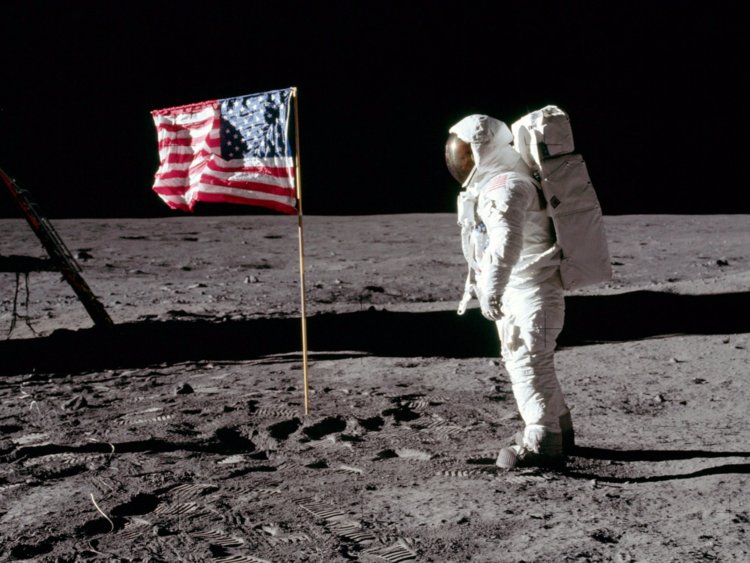
Back during the 'Space Race', as the two superpowers were each nearing their attempts to finally send manned crews to the moon, there was a growing concern around the world that the nation that succeeded first would plant their flag and declare the moon to be the sole property of their country.  The very thought of the Soviets erecting a giant statue of Lenin on the surface of the moon, there to glare contemptuously down upon the American people for all time, rang some legitimate alarm bells in the U.S. government.  And so in 1967, President Lyndon Johnson spearheaded what became known as "The Outer Space Treaty", signed by virtually all of the members of the United Nations, and which among other things declares the moon to be the property of all of the Earth, and thus no single nation can lay claim to it.  All the same, it probably still galls the Russians that the only flag planted by humankind on the moon remains the Stars and Stripes.


Second Place is Just the First Place Loser

As mentioned, the Space Race was conducted with particular intensity by the two rival superpowers.  This actually proved beneficial to civilization, as it pushed scientific research and development at an accelerated pace, developing technologies (everything from computers and GPS to freeze-dried foods and memory foam) over the course of months and years that might otherwise not have been perfected for decades.  And it also gave the U.S. and U.S.S.R. an outlet for national chest-thumping that didn't involve lobbing nuclear weapons at one another.

The Soviets had a couple of edges over the Americans in the race, in that they got started first (putting Sputnik into orbit back in 1957), and also because they considered human life to be cheap, and they weren't reluctant to sacrifice as many cosmonauts as it took in order to get their space program moving.  The Soviets lost five cosmonauts (that they acknowledged...the number may have been higher, perhaps significantly so) in accidents, and they nary skipped a beat.  When NASA lost three astronauts in a freak accident in January of 1967, it suspended the Apollo program for months as engineers worked to make certain such an accident never happened again.  As a result, the U.S. lost nearly a year of lead time to the Russians when Apollo 11 finally launched in July of '69.

When NASA announced the moonshot several months prior to the event, the Soviets went into overdrive trying to beat the U.S.  But despite their best attempts, they simply weren't capable yet of sending cosmonauts to the moon and back safely, and losing them in space with the eyes of the entire world upon them would have been a public relations disaster of the highest magnitude.

So instead Moscow ordered a Plan B:  when the Americans set foot on the moon, they would be greeted by Mother Russia, in the form of an unmanned Soyuz craft that was launched in secret a few days before the Apollo launch, and which was scheduled to land on the moon just prior to the astronauts.  The craft did reach the moon as planned, but then suffered a technical breakdown and was incapable of landing.  And so, as Armstrong and Aldrin bounced across the lunar surface, the Soviet Soyuz spun overhead in moon orbit.  Finally the order was given to get the craft down on the moon by any means necessary, so the Russian flight directors did the only thing they could...they killed the engine and crashed the capsule onto the surface, where its shattered wreck still sits.

Meantime back in the U.S.S.R., a secondary effort had been underway to get another Soyuz rocket  ready for launching, this one to carry actual cosmonauts, in the event that Apollo 11 suffered a mishap on the way to the moon and the mission had to be aborted (such as was later seen with Apollo 13).  It would have been several months before NASA could have made another attempt for the moon, and the Soviets were confident that before then, they could have put their own cosmonauts up there.

Once the Americans landed on the moon however, the Soviet moon program came to an abrupt end, as no one saw any propaganda value in being the second country to get there.


I'd Like a Room with a View, Please

Hilton has a plan to put a hotel on the moon.  And I don't just mean this is something they said one time for a laugh at a hospitality industry luncheon.  Since 1958 in fact, the Hilton Corporation has been formulating a plan to build a hotel on the surface of the moon, so that you and I can stay there when we visit.  Mind you, it's not a major project, given the fact that it isn't feasible yet to even consider achieving, but it is ongoing.  You see, in the 1960s the widespread belief was that when we finally got to the moon, we weren't just going to gather up a few rocks and then come back home to stay.  It was firmly believed...especially at NASA...that the great project of the 1970s would be to construct permanent moonbases, and that these would not only be used for scientific purposes, but that everyday people could fly to the moon and vacation there.  And Hilton intended to make damned certain they were the first hotel up there.  It was actually taken for granted by the public at large that they would succeed...indeed, filmmaker Stanley Kubrick had faith in Hilton doing so, so much so he even included a nod to the hotelier in his landmark 2001: A Space Odyssey.

When President George W. Bush announced a renewed effort to finally go back to the moon and on to Mars a decade or so back, Hilton reiterated its intent to go to the moon as well.


Positively Odorous

Just because there's no breathable atmosphere on the moon doesn't mean it doesn't have an odor.  The astronauts discovered this as they returned to their landing craft, took off their helmets, and found that the moon dust that clung to their space suits had a distinct smell not unlike that of spent gunpowder.


The Inadvertent Surrender

I mentioned earlier about the Stars and Stripes having been planted on the moon...six times, in fact.  But in a way I was speaking rhetorically, because although five of the six flags are still standing (Armstrong and Aldrin accidentally blew theirs down when they launched up off of the moon to return home), a visitor to the moon today would not see any American flags.  You see, those were just plain old nylon flags, just like the ones people fly at their homes.  Since there is no wind on the moon, the nylon is still in pristine shape, with no frays or tears.  However, the extreme exposure of ultraviolet light has faded the flags of their blue and red, so that now they are all-white.  Any future expeditions to the moon will probably see visitors leaving behind a metallic flag that will resist fading.


Well, I Heard the Moon Landing was Faked, and the Whole Thing was a Hoax

I'm just going to leave this link to a GIF of Buzz Aldrin punching a Moon Landing Denier.  I think it answers the issue admirably.

We Came, We Saw, We Left

After billions of dollars spent for one of the greatest scientific and technological quests in human history, the United States sent only six missions onto the moon over the course of three years, and then abandoned the moon ever since.  What about those grand plans for moonbases, and for using the moon as a launching pad to explore the rest of our solar system?  What about giant leaps for mankind into the cosmos?

What killed further moon landings in the early Seventies was a combination of a reeling national economy (the U.S. having been hit by the dual body blows of inflation and recession, coupled with an energy crisis brought on by the OPEC oil embargo), which suddenly made spending such vast sums of money on going into space questionable; and perhaps more devastatingly, a collapse in public interest in the space program.  With so few Americans caring much for outer space after the heady days of Apollo 11, NASA lost political support in Congress, with the result of seeing their budget slashed.  Moonshots were expensive, so they were terminated.

NASA did try to rekindle public interest with such sexy projects as the Apollo/Soyuz link-up in space, and with Skylab (which plummeted back down to Earth in 1979...a perfect metaphor for America in that era, it seemed).  What really succeeded was the space shuttle program (although not without tragedies).  Nevertheless, this was a bit of a hollow victory, as the shuttles, for all of their success placing satellites into orbit and conducting scientific research, were never able to fulfill their original intention...to ferry people and supplies to and from the moon.

In this sense, the legacy of the Apollo program is one of unfulfilled promise...of grabbing the brass ring, but then putting it back.  It makes all of the hard work that thousands of pilots, engineers, doctors, scientists and technicians did seen unfinished.


Is This Duty Free?

Even going to outer space won't let you escape the bureaucracy.  When Armstrong, Aldrin and Collins splashed down in the ocean following their successful voyage and were brought back to Hawaii, they had to fill out customs paperwork for the moon rocks they had brought back with them.

I particularly like the "To be determined" answer to the question as to whether the astronauts carried any back conditions that could lead to a medical crisis.  It's the equivalent of saying, "Eh, maybe you brought back a deadly space virus, maybe you didn't.  We'll find out sooner or later."


What do You give to the Kid that has Everything?

Not long after the Apollo 11 mission, President Richard Nixon made an official visit to the Philippines, and he learned that the 11 year old son of Filipino dictator Ferdinand Marcos, Bongbong Marcos, was an avid fan of the space program.  To the surprise of all later than evening at the state dinner, Nixon went off-script and announced that just as soon as NASA began allowing civilians to fly to the moon, Bongbong would be on the very first flight, a guest of the United States government.

Now age 61, Bongbong is still waiting for that trip.


The Final Frontier

One of the great unsung heroes of NASA is Lt. Uhura.  That is to say, Nichelle Nichols, the actress who played Uhura on Star Trek.  Her pioneering work on the show (not only being a rare African-American face on television in the Sixties, but an African-American woman in a position of authority and responsibility, not simply a damsel in distress), along with genuine personal excitement over the Apollo program and moon missions led her, following the cancellation of the TV series, to largely give up acting.  Instead, she devoted much of her time and efforts over the next few decades working for NASA itself, primarily to recruit women and minorities to join the space program.

And in this she was spectacularly successful, personally bringing in Sally Ride, the first female astronaut, Guion Bluford, the first African-American female astronaut, and numerous other astronauts and administrators.  Her work granted her the honor to be "in the room" along with the technicians when Viking I successfully landed on Mars.  And scroll back up and take a look at the photo I posted of the space shuttle; most of those people you see are Nichelle's fellow cast mates from Star Trek.  She was instrumental in convincing NASA of the publicity value of christening that first shuttle as the Enterprise, and in making sure her fellow actors were present for the first public roll-out of the craft, a gesture which ensured widespread media coverage, and got the shuttle program off to a rousing start.  And in a fun convergence of world's colliding, Nichols helped arrange for astronaut Mae Jemison, a fan of Trek, to guest star on an episode of Star Trek: The Next Generation!

In turning her back on acting, she relinquished the spotlight, and any hopes she may have had of greater fame and fortune.  But the work she has done for NASA has had a lasting impact on the journey to outer space.  In this, she has truly fulfilled the mandate To Boldly Go!


Hope for the Best, Plan for the Worse

There is an old military saying: no battle plan survives the battle.  As the astronauts, all of them military pilots, well knew, that while intensive planning for the moon launch was vital, it would be impossible to plan for every possible contingency.  As the later Apollo 13 mission fully proved, fate can smash the most detailed of plans.

NASA had full confidence in its ability to get the three astronauts to the moon safely.  Where uncertainty arose was in landing them safely upon the surface, and then in getting their lander up off of the moon so that they could return to the capsule to fly back home.  It was a small concern to be sure, but large enough that it couldn't be discounted.

In the event the astronauts were left stranded on the moon by mishap, with no means of rescuing them, the White House had quietly written up a speech for President Nixon to give to the nation.  It said in part:

Fate has ordained that the men who went to the moon to explore in peace will stay on the moon to rest in peace.

These brave men, Neil Armstrong and Edwin Aldrin, know that there is no hope for their recovery.  But they also know that there is hope for mankind in their sacrifice.

These two men are laying down their lives in mankind's most noble goal:  the search for truth and understanding.

In ancient days, men looked at the stars and saw their heroes in the constellations.  In modern times, we do much the same, but our heroes are epic men of flesh and blood.

Others will follow, and surely find their way home.  Man's search will not be denied.  But these men were the first, and they will remain the foremost in our hearts.

For every human being who looks up at the moon in the nights to come will know that there is some corner of another world that is forever mankind.

Thankfully, Nixon did not have to give this address.  Instead, he got to speak with Armstrong and Aldrin on a telephone hookup from the White House to the moon, and told them, "For one priceless moment in the whole history of man, all the people on this Earth are truly one."

And in that moment, we were.